Are You Safe In Your Relationship? Our Free Guide Is Now Available
Sometimes the hardest part of recognising an unsafe relationship is finding the words for what is happening.
You might have a feeling that something is wrong — a persistent sense of walking on eggshells, a gradual drift away from the people you love, a version of yourself you barely recognise anymore. But without a clear name for it, that feeling can be easy to dismiss. Easy for others to dismiss, too.
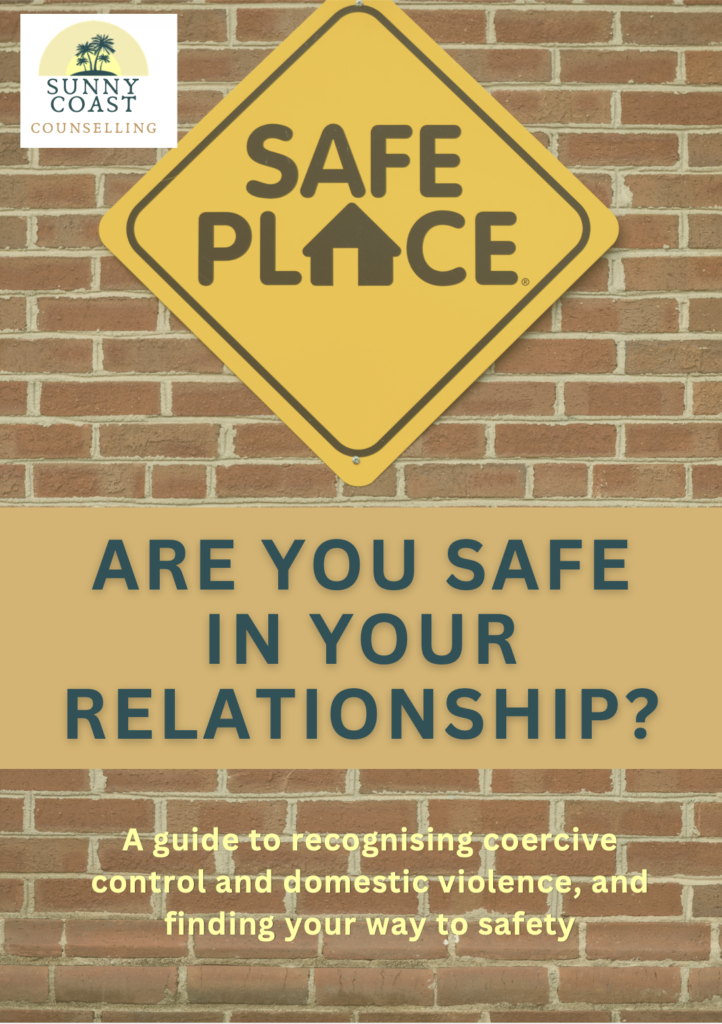
That is exactly why we have created Are You Safe In Your Relationship? — a free, downloadable guide to help people recognise the signs of coercive control and domestic violence, understand why leaving is rarely straightforward, and find their way to the right support.
What’s in the guide?
The guide covers:
- What coercive control and domestic violence actually look like — including the forms that leave no physical marks
- A self-reflection checklist to help you name what you may be experiencing
- Why leaving is complex, and why that complexity deserves compassion rather than judgment
- A practical safety planning section for those who are preparing to leave
- Guidance for friends and family who are worried about someone they care about
- A comprehensive directory of free services — including Sunshine Coast regional services, Queensland helplines, and national support
It has been written for people of all genders and relationship structures, because abuse does not discriminate.
A note on coercive control
In Queensland, coercive control became a standalone criminal offence on 26 May 2025 under Hannah’s Law. This is a significant moment — one that validates what many victim-survivors have long known: that domestic abuse is not only physical. The guide explains what this means in plain language.
This guide is a free community resource
There are no strings attached, no sign-up required, and no marketing agenda. We created it because timely, accurate information can make a genuine difference — and because everyone deserves to know that help is available.
If you think it might be useful to someone you know, please share it freely.
If you or someone you know is in immediate danger, please call 000. For 24/7 support, contact 1800RESPECT on 1800 737 732 or DVConnect Womensline on 1800 811 811.