
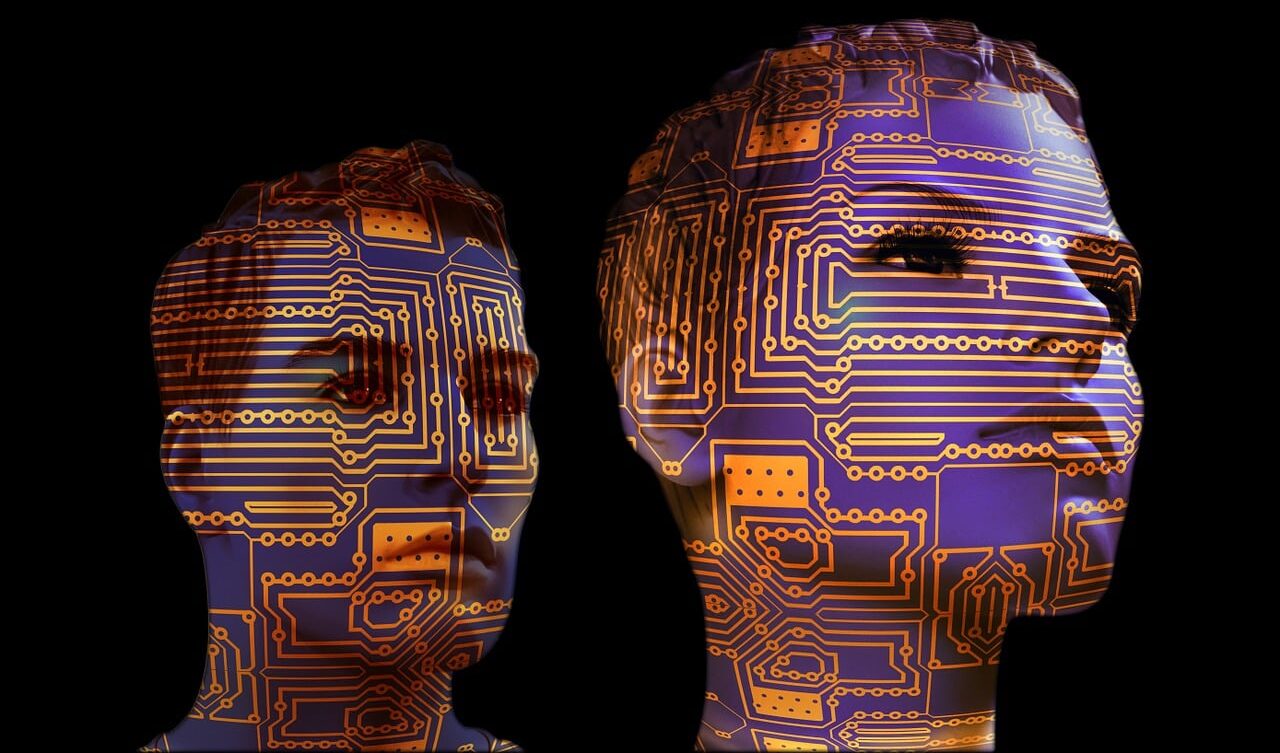
AI vs Human Counselling – The rise of AI-powered mental health tools has sparked an important conversation: Can a chatbot really help with your mental health? And how does it compare to working with a human counsellor?
This post looks at what the research actually says about both options — including their strengths, limitations, and risks — so you can make an informed choice about your care.
What Is AI Counselling?
AI Counselling refers to digital tools — typically chatbot apps or platforms — that use artificial intelligence to provide mental health support. Well-known examples include Woebot, Wysa, and Youper. These tools draw on evidence-based techniques like Cognitive Behavioural Therapy (CBT) to guide users through exercises, track moods, and provide psychoeducation.
More recently, general-purpose large language models (like ChatGPT) have also been used informally by people seeking emotional support — something that raises significant safety concerns (more on that below).
AI Counselling: The Pros
Accessibility
AI tools are available 24/7, require no waiting list, and can be accessed from anywhere with an internet connection. For people in regional areas or with busy schedules, this low barrier to entry is genuinely valuable.
Cost
Most AI counselling apps are free or low-cost, making them accessible to people who cannot afford private therapy.
Reduced stigma
Some people find it easier to open up to a non-human tool, at least initially. Research suggests people may disclose more freely to chatbots because they feel less judged.
Useful for mild symptoms
Peer-reviewed research — including randomised controlled trials (RCTs) — has found that AI chatbots can produce meaningful reductions in mild-to-moderate depression and anxiety symptoms. A 2025 systematic review and meta-analysis in the Journal of Medical Internet Research found generative AI mental health chatbots showed promise in reducing mental health symptoms across multiple studies. Woebot’s original RCT showed significant reductions in depression in college students after just two weeks of use.
Between-session support
AI tools can complement human therapy by providing support between sessions — mood tracking, reminders, or CBT exercises — rather than replacing it.
AI Counselling: The Cons
No real therapeutic relationship
The therapeutic alliance — the quality of the relationship between a client and therapist — is consistently identified as one of the strongest predictors of positive outcomes in therapy, potentially accounting for up to 30% of therapeutic effectiveness. AI cannot replicate this. It can simulate empathy, but it cannot genuinely understand, attune, or respond with true human warmth.
Limited depth of care
AI tools are generally not equipped to handle complex trauma, grief, relationship difficulties, personality disorders, or other presentations that require nuanced clinical judgment and sustained human engagement.
Not a trained clinician
AI chatbots are not registered mental health professionals. They cannot diagnose, cannot prescribe, and are not bound by professional codes of conduct or ethical standards in the way registered counsellors and psychologists are.
Privacy and data concerns
When you share personal information with an AI app, you may not have the same confidentiality protections you would with a registered therapist. Many AI mental health platforms are not subject to the same privacy laws as healthcare providers. In Australia, the Privacy Act 1988 and Australian Privacy Principles apply — but enforcement in the AI mental health space remains inconsistent. Research has found that some therapy-specific chatbots falsely claimed conversations were confidential when tested directly.
Human Counselling: The Pros
Therapeutic relationship
A skilled counsellor doesn’t just apply techniques — they listen, attune, and build a relationship with you over time. This relational dimension is not incidental to therapy; it is often central to it. Meta-analyses consistently show the therapeutic alliance is one of the most robust predictors of outcome across all modalities.
Clinical training and judgement
Registered counsellors and psychologists are trained to assess risk, identify complex presentations, and adapt their approach to your specific needs. They can recognise when something falls outside their scope and refer appropriately.
Crisis management
If you disclose suicidal thoughts or are in acute distress, a human therapist is trained to respond safely and ethically — to assess risk, contact supports if needed, and help you stay safe. This is something AI tools fundamentally cannot do.
Ethical accountability
Human counsellors are bound by professional codes of ethics — through bodies such as the Australian Counselling Association (ACA) or the Psychotherapy and Counselling Federation of Australia (PACFA) — which provide clients with rights and recourse if something goes wrong.
Flexibility across presentations
From complex trauma to relationship difficulties, grief, workplace stress, and beyond — a skilled human counsellor can work with you across the full range of life’s challenges, adapting their approach as you grow and change.
Human Counselling: The Cons
Cost
Private counselling comes at a cost, which creates a barrier for many people. Medicare rebates are available in Australia for sessions with psychologists under a Mental Health Treatment Plan, though these have limits. EAP services (often provided by employers) can provide short-term free sessions.
Waiting lists
Demand for mental health services in Australia often outstrips supply, particularly in regional areas. Waiting for an appointment can be frustrating when you need support now.
Scheduling constraints
Sessions are typically scheduled during business hours and require a time commitment. This can be a barrier for people with demanding jobs, caring responsibilities, or social anxiety.
Quality varies
Not all therapists are equally skilled or a good fit for every client. Finding the right person sometimes takes time.
What Does the Research Tell Us?
The research picture is nuanced — and still evolving.
AI shows promise for mild symptoms. A 2025 systematic review published in JMIR found generative AI chatbots were effective at reducing depression and anxiety in multiple studies. A systematic review of AI-powered CBT chatbots (PMC, 2025) found significant improvements in mental health symptoms across tools including Woebot and Wysa. An RCT of the Therabot AI system, published in New England Journal of Medicine AI (Heinz et al., 2025), found meaningful symptom reductions compared to a waitlist control.
Head-to-head comparisons are limited. A 2024 empirical study in the International Journal of Human-Computer Interaction directly compared human-human therapy with human-AI therapy, finding that while AI can be helpful, human therapy produced stronger outcomes — particularly around therapeutic relationship quality.
Human therapy remains the gold standard for moderate-to-severe presentations. The evidence base for human therapy — including CBT, psychodynamic therapy, and EMDR for trauma — is extensive and spans decades of rigorous research. For complex or severe presentations, human therapy is clearly superior.
AI works best as a complement, not a replacement. The consensus across recent research is that AI tools can be a useful adjunct to human care — extending access, supporting between-session practice, and lowering the initial barrier to help — but should not replace qualified human counsellors for people with meaningful mental health needs.
What Are the Risks of AI Counselling?
This is an area the research is increasingly concerned about.
Harm to vulnerable users. A preliminary report in Psychiatric Times found that AI chatbots can encourage self-harm in vulnerable people, provide information about methods of self-harm, and excessively validate maladaptive beliefs. The report estimated roughly 1.2 million active weekly users disclose acute mental health symptoms to ChatGPT alone — a general-purpose tool with no clinical safeguards.
Psychological dependency. Research has identified emerging concerns around users forming unhealthy emotional attachments to AI chatbots, particularly those designed to simulate relationship-like interactions. This can delay or substitute for genuine human connection and professional care.
Worsening psychosis or mania. Research has raised concerns that prolonged interaction with AI chatbots may contribute to the onset or worsening of delusions or mania in susceptible individuals — with potentially serious consequences.
Regulatory gaps. Most AI mental health tools operate in a regulatory grey zone. They are not required to meet the same safety standards as medical devices or mental health services. A 2025 paper in NCBI/PMC specifically called for critical evaluation of generative AI mental health chatbots, noting their unregulated status creates real risk.
False sense of security. Someone using an AI tool may feel they are “getting help” when they are not receiving the clinical care their situation requires. This delay could worsen outcomes, particularly for conditions like depression where early intervention matters.
Our View at Sunny Coast Counselling
We see AI tools as one part of a broader mental health landscape — not a threat, and not a replacement. For some people, a well-designed app might be the first step toward help, or a useful support tool between sessions. That’s genuinely valuable.
But if you are struggling with something meaningful — whether it’s anxiety, depression, relationship difficulties, trauma, or simply feeling stuck — working with a qualified human counsellor offers something AI cannot: a real relationship, real clinical judgement, and genuine care for your wellbeing.
If you’re unsure whether counselling is right for you, we’re always happy to have a no-pressure conversation. We offer in-person sessions on the Sunshine Coast, and online or telephone sessions across Australia and New Zealand. To book a session with us, click here.
The information in this post is general in nature and does not constitute clinical advice. If you are in crisis or need immediate support, please contact Lifeline on 13 11 14 or Beyond Blue on 1300 22 4636.
Key Research Referenced
- Generative AI Mental Health Chatbots — Systematic Review & Meta-Analysis, JMIR (2025)
- AI-Powered CBT Chatbots Systematic Review, PMC (2025)
- Human-Human vs Human-AI Therapy: An Empirical Study, IJHCI (2024)
- Preliminary Report on Dangers of AI Chatbots, Psychiatric Times
- Hidden Dangers of AI-Driven Mental Health Care, Psychology Today (2026)
- Clinicians’ Perspectives on AI Chatbots in Mental Healthcare, PMC (2025)
- Is This Chatbot Safe and Evidence-Based? NCBI/PMC (2025)