Running on Empty: Understanding Stress and What to Do When It’s Getting the Better of You
There’s a particular kind of tired that sleep doesn’t fix.
You wake up already bracing for the day. Your to-do list grows faster than you can work through it. Small things that wouldn’t normally bother you are suddenly unbearable. And somewhere in the back of your mind, there’s a nagging sense that you should just be able to handle this — that everyone else seems to be coping fine, so why aren’t you?
If any of that sounds familiar, you’re not alone. And you’re not failing.
You’re stressed.
Stress is one of the most universal human experiences on the planet. And yet, despite how common it is, it remains one of the least well understood. Most of us know what stress feels like. Far fewer of us understand what it actually is, why it affects us the way it does — and critically, what genuinely helps.
That gap between experiencing stress and understanding it is exactly what our new guide sets out to close.
The Problem With “Just Switching Off”
When it comes to stress, the advice on offer is often well-intentioned but frustratingly shallow.
“Take a holiday.” “You just need to relax.” “Try not to let things get to you.”
The trouble is, if switching off were that simple, you’d have done it already.
Stress isn’t simply a mindset issue, and it can’t always be resolved with a weekend away or a warm bath (though both have their place). Chronic stress has real, measurable effects on the body and brain — on sleep, immunity, digestion, concentration, mood, and relationships. Understanding why your body responds to pressure the way it does is far more useful than being told to calm down.
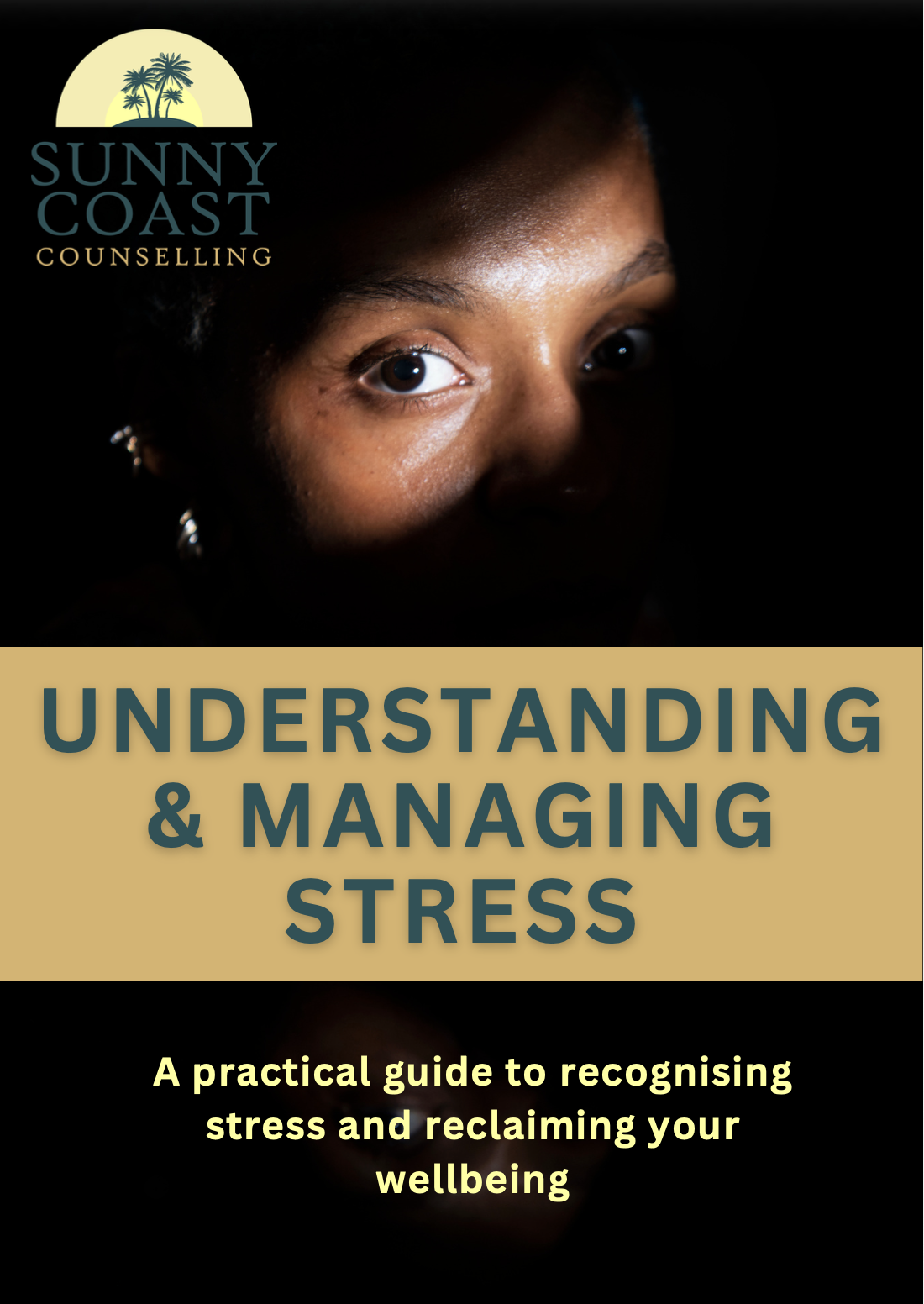
That’s the foundation of our new eBook: Understanding & Managing Stress.
What the Guide Covers
This resource has been written for anyone who feels like stress is getting the better of them — whether the source is work pressure, relationship strain, financial worry, parenting demands, a health challenge, or simply the accumulation of too much for too long.
Here’s a glimpse of what’s inside:
🔬 What Stress Actually Is — and What It Does to Your Body
We begin with the science, because understanding the stress response changes everything. You’ll learn what happens in your nervous system when you’re under pressure, why your body reacts the way it does, and why that response — which evolved to protect you — can become a problem when it’s switched on too often or for too long.
⚠️ Recognising When Stress Has Become a Problem
Not all stress is harmful. In fact, some stress is genuinely useful. The guide helps you distinguish between manageable pressure and the kind of chronic stress that takes a real toll — and gives you the tools to recognise where you are on that spectrum.
🌀 The Many Sources of Stress
Stress rarely has a single cause. Work, relationships, finances, health, parenting, uncertainty — the guide explores the most common stressors people bring to the counselling room and why they so often interact and compound each other.
🛠️ Evidence-Based Strategies That Actually Work
This is the heart of the guide. Drawing on approaches from Cognitive Behavioural Therapy (CBT), Acceptance and Commitment Therapy (ACT), and mindfulness-based research, you’ll find a practical toolkit of strategies and exercises to help you respond to stress differently — not just manage it in the moment, but shift your relationship with it over time.
📝 Worksheets and Exercises to Use, Not Just Read
One of the things that sets this guide apart is its emphasis on doing, not just reading. The exercises and worksheets throughout are designed to be genuinely used — so the guide suggests keeping a pen handy from the very first page.
You Don’t Have to Be “Falling Apart” to Benefit
It’s worth saying clearly: this guide isn’t just for people in crisis. It’s for anyone who’s been running a little too hot for a little too long — the person who’s functioning fine on the outside but is exhausted on the inside; the professional who’s good at their job but can’t seem to leave it at the office; the parent who’s holding everything together for everyone else, with nothing left for themselves.
Stress exists on a spectrum, and you don’t have to be at breaking point to deserve support and good information.
A Flexible Resource for Real Life
Like our anxiety guide, this eBook is designed to meet you where you are. You don’t need to read it from start to finish. Feel free to go straight to the sections most relevant to your situation right now — whether that’s understanding what’s happening in your body, identifying your stress triggers, or finding practical strategies to try this week.
A Note From Me
Stress is something I encounter in almost every counselling session I conduct. It weaves through relationship difficulties, workplace challenges, parenting struggles, and health concerns. It sits beneath a lot of the anxiety and low mood that people bring to therapy.
In my experience, one of the most powerful shifts a person can make is moving from “I’m just a stressed person” to “I understand what stress is doing to me, and I have tools to work with it.” That shift doesn’t happen overnight — but it starts with understanding.
I hope this guide gives you that starting point.
If it raises questions for you, or if you’d like to explore things further with some one-on-one support, I’d be glad to hear from you. You can reach me at john@sunnycoastcounselling.com.au or book a session online — in person, via Zoom or Teams, or by telephone.
Get Your Copy
Understanding & Managing Stress is available now through the Sunny Coast Counselling online store for just $9.90.
For less than the cost of a takeaway coffee and a snack, you’ll have a practical, evidence-informed guide you can return to again and again — whenever life turns up the heat.
John Belchamber is a qualified counsellor and the Managing Counsellor at Sunny Coast Counselling, based on the Sunshine Coast, Queensland. Sunny Coast Counselling offers individual counselling, couples counselling, Employee Assistance Program (EAP) services, and wellness seminars — available in-person, via Zoom/Teams, and by telephone.
If you are experiencing a mental health crisis or need immediate support, please contact Lifeline on 13 11 14, Beyond Blue on 1300 22 4636 or call 000.