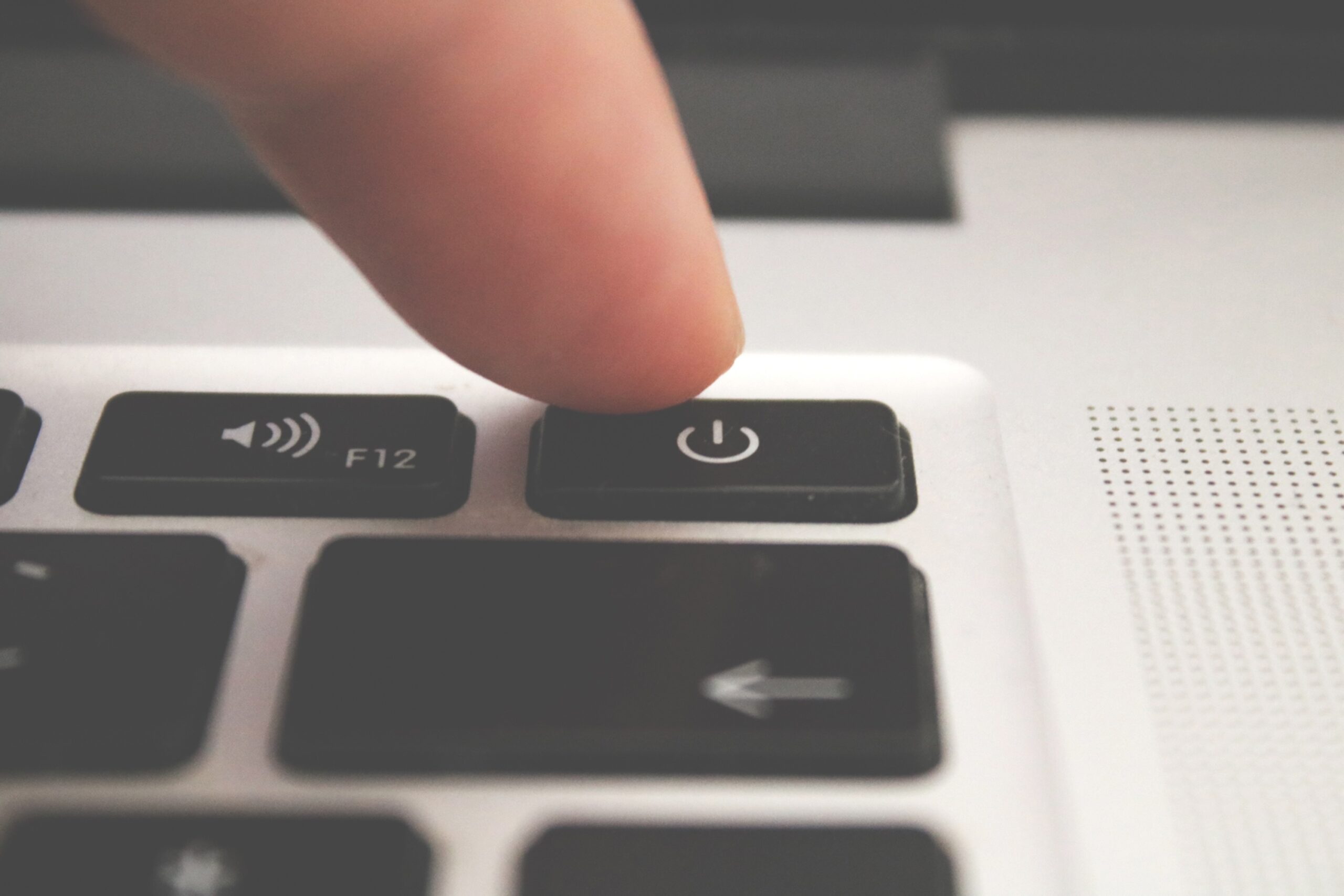
It’s 8:47pm. You’ve had dinner, the kids are in bed, and your phone buzzes on the couch beside you. It’s a work email. You tell yourself you’ll “just have a quick look” — and twenty minutes later you’re mentally back at your desk, heart rate up, evening gone.
If this sounds familiar, you’re not alone. Constant notifications, back-to-back virtual meetings and the expectation of instant replies have made it harder than ever to switch off, and Australian workplace wellbeing research points to this “always-on” culture as one of the leading drivers of burnout in 2026.
Why switching off matters more than it seems
Psychologist Sabine Sonnentag’s research on recovery from work stress describes something called psychological detachment — mentally disengaging from work during evenings, weekends and leave. Her studies consistently find that people who detach more fully from work during non-work time report better life satisfaction and fewer symptoms of stress, without becoming less engaged when they’re back on the job. In other words, switching off isn’t slacking off — it’s what allows you to perform well when you’re on.
The reverse is also well documented. Research on “workplace telepressure” — the urge to respond promptly to work messages outside work hours — has linked after-hours email use to poorer wellbeing, increased work-family conflict, and contributions to insomnia and low mood. The pattern is consistent: the more your evenings are colonised by work, the less recovery you get, and the more that catches up with you.
A boundary, not a discipline problem
It’s worth naming clearly: struggling to disconnect isn’t a personal failing or a time-management issue. It’s a predictable response to a work culture that rewards constant availability. Sonnentag’s research also found that employees detach more easily from work when their leaders visibly respect the boundary between work and non-work life — meaning workplace culture, not just individual willpower, plays a major role.
This is part of why Australia introduced the Right to Disconnect under the Fair Work Act, in effect since August 2024 for most employers (and August 2025 for small businesses). It gives employees the right to refuse to monitor, read or respond to work contact outside working hours, unless that refusal would be unreasonable. It doesn’t stop an employer from reaching out — but it protects your right not to engage until you’re back on the clock.
Practical ways to hold the line
A few small, evidence-informed habits can help rebuild the boundary between work and home:
- Create a physical or visual cue that work has ended — closing the laptop, changing out of work clothes, or a short walk between “work mode” and “home mode.”
- Turn off non-urgent notifications after hours, or use separate profiles/apps for work email so it isn’t sitting on your home screen.
- Talk to your manager about expectations — many people assume replying quickly is required when it isn’t. A short, direct conversation can clear this up.
- Protect at least one recovery activity daily — even 20–30 minutes of something genuinely absorbing (exercise, a hobby, time with family) supports the kind of mental detachment the research points to.
- Know your rights — under the Right to Disconnect, you’re not obliged to answer outside reasonable hours, and it’s worth understanding what “reasonable” means for your role via the Fair Work Ombudsman.
When it’s bigger than a boundary issue
Sometimes the always-on habit is tangled up with anxiety, perfectionism, or a workplace culture that genuinely doesn’t respect limits. If switching off feels impossible even when you try, or if work stress is spilling into sleep, relationships or mood, that’s worth talking through with a professional rather than troubleshooting alone.
At Sunny Coast Counselling, we support individuals working through burnout and work-related stress, and we run wellness seminars and workplace training for organisations wanting to build healthier norms around availability and recovery. If your workplace offers an Employee Assistance Program (EAP), it’s also a confidential, no-cost way to get support — our EAP services are available to employees across the Sunshine Coast, and via phone or Zoom for clients elsewhere in Australia and New Zealand.
If you would like to book a counselling session, click here.
Sources:
- Sonnentag, S. (2012). Psychological Detachment From Work During Leisure Time. Current Directions in Psychological Science. https://journals.sagepub.com/doi/abs/10.1177/0963721411434979
- Sonnentag, S., & Fritz, C. (2015). Recovery from job stress: The stressor-detachment model as an integrative framework. Journal of Organizational Behavior. https://onlinelibrary.wiley.com/doi/abs/10.1002/job.1924
- “Always online”: How and when task interdependence and dispositional workplace anxiety affect workplace telepressure after hours. PMC. https://www.ncbi.nlm.nih.gov/pmc/articles/PMC11317195/
- Keeping Up With Work Email After Hours and Employee Wellbeing. Occupational Health Science / PubMed. https://pubmed.ncbi.nlm.nih.gov/35097187/
- Fair Work Ombudsman — Right to disconnect. https://www.fairwork.gov.au/about-us/workplace-laws/legislation-changes/closing-loopholes/right-to-disconnect