
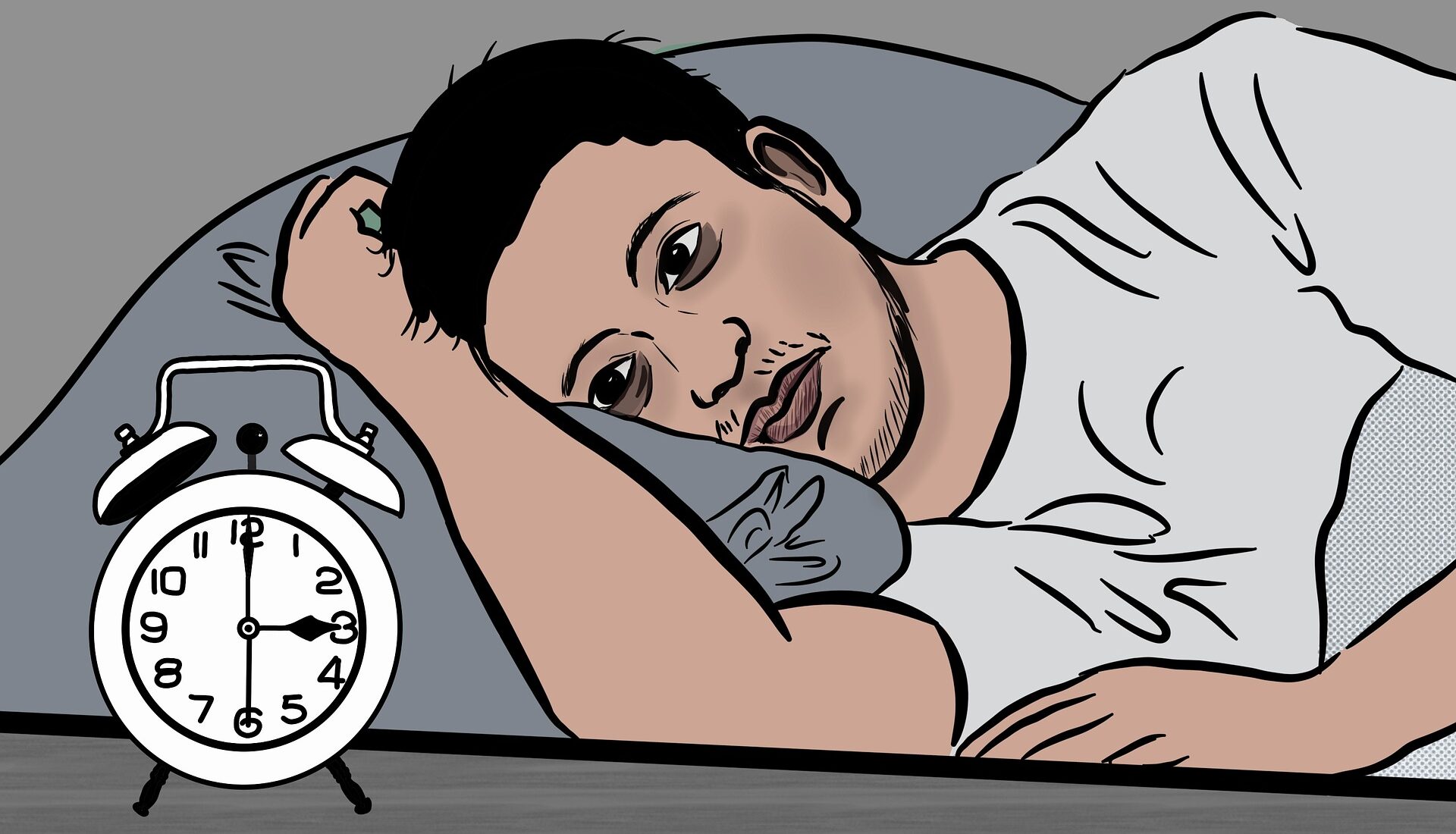
You’ve had a bad night. Maybe two or three in a row. And you’ve probably noticed that it doesn’t just leave you tired — it leaves you flatter, more irritable, more anxious, less able to cope with things that would normally roll off you. That’s not in your head. Sleep and mood run on the same circuitry, and each one shapes the other.
A relationship that runs both ways
For a long time, poor sleep was thought of mainly as a symptom of depression and anxiety — something that happened as a result of feeling low or anxious. Research over the past decade has made clear it’s more complicated than that. A large meta-analysis of 34 cohort studies, involving over 170,000 participants, found that people with insomnia had more than double the risk of later developing depression. Anxiety and insomnia are similarly linked, with studies finding a moderate-to-strong association between the severity of sleep problems and anxiety symptoms.
The relationship goes both directions: poor sleep makes it harder to regulate emotion and increases vulnerability to low mood and anxiety, while anxiety and depression, in turn, disrupt sleep — through racing thoughts, early waking, or a nervous system that won’t settle. Once this loop is running, it tends to sustain itself: bad sleep worsens mood, worse mood disrupts sleep further, and so on.
Why this matters for treatment
This bidirectional link has an important practical implication: sleep isn’t just a symptom to wait out until mood improves — it’s a genuine treatment target in its own right. Researchers increasingly describe insomnia as a modifiable risk factor for future mental health problems, meaning addressing sleep directly can help protect mood, not just follow it.
Cognitive behavioural therapy for insomnia (CBT-I) is the best-evidenced approach here. Multiple meta-analyses show CBT-I produces moderate-to-large improvements in sleep quality that are sustained at three, six and even twelve months after treatment — considerably more durable than medication-only approaches. It’s recommended as the first-line treatment for insomnia, including insomnia that occurs alongside depression or anxiety, and research suggests its two most effective components are sleep restriction (rebuilding a stronger, more consolidated sleep pattern) and stimulus control (retraining the association between bed and sleep).
Signs the loop might be at play for you
A few patterns suggest sleep and mood may be reinforcing each other rather than sleep simply being “collateral damage” from a stressful patch: mood is noticeably worse on days following poor sleep; you feel wired and unable to switch off at bedtime, particularly when anxious; low mood or anxiety has coincided with a sustained change in sleep quality, not just quantity; and the usual sleep advice (earlier nights, less screen time) hasn’t shifted things because the underlying anxiety or low mood keeps disrupting sleep regardless.
Breaking the cycle
The encouraging part is that this loop can be interrupted from either direction — improving sleep tends to lift mood, and treating the underlying anxiety or depression tends to improve sleep. Trying to tackle both at once, with structured, evidence-based support, is often more effective than treating either in isolation.
If poor sleep and low mood have been feeding each other for a while, it’s worth addressing properly rather than waiting for one to resolve the other on its own. At Sunny Coast Counselling, we support clients working through the sleep–mood connection as part of individual counselling, in person on the Sunshine Coast or via Zoom and phone across Australia and New Zealand.
If you’d like to book a counselling session, click here.
Sources:
- Insomnia and the risk of depression: a meta-analysis of prospective cohort studies. BMC Psychiatry. https://www.ncbi.nlm.nih.gov/pmc/articles/PMC5097837/
- Insomnia as a predictor of mental disorders: A systematic review and meta-analysis. PubMed. https://pubmed.ncbi.nlm.nih.gov/30537570/?dopt=Abstract
- Cognitive behavioral therapy for insomnia: A meta-analysis of long-term effects in controlled studies. PubMed. https://pubmed.ncbi.nlm.nih.gov/31491656/
- Network meta-analysis examining efficacy of components of cognitive behavioural therapy for insomnia. ScienceDirect. https://www.sciencedirect.com/science/article/pii/S0272735824001284
- The Clinical Effectiveness of Cognitive Behavioral Therapy for Patients with Insomnia and Depression: A Systematic Review and Meta-Analysis. PMC. https://www.ncbi.nlm.nih.gov/pmc/articles/PMC7378630/